

Introduction
Steering wheel knobs, also known as spinner knobs, have been around for years for truck and bus drivers. These attach to the steering wheel and allow for quick one-handed turns. While they’re convenient, especially for big vehicles like trucks and buses, steering wheel knobs have been a topic of controversy in the trucking industry.
Despite their popularity, these devices pose big risks. For commercial drivers who have to operate heavy machinery on various roads, steering wheel knobs can be a hazard. The convenience they offer may come at the cost of losing control, especially in situations where both hands on the wheel are required. This has sparked debate in the industry about whether they should be restricted or banned altogether, with some companies warning against using them.
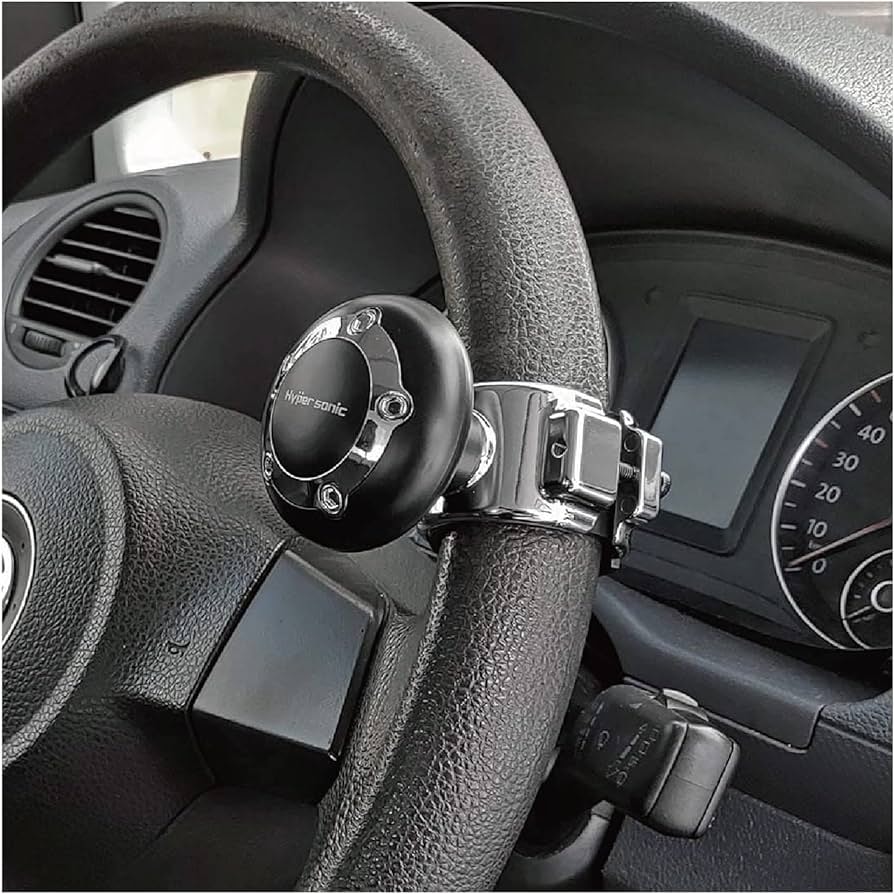
What are Steering Wheel Knobs?
Steering wheel knobs are small devices that attach to the steering wheel and allow you to turn the wheel with one hand. These knobs are designed to make steering easier, especially for big vehicles like trucks and buses where the wheel requires more effort to turn.
For some truck drivers, these knobs are super useful, especially when making tight turns or navigating through tight spaces. The reduced effort in steering can be a big advantage after long hours on the road. By providing a simple way to spin the wheel, steering wheel knobs can help you control your big vehicle better.
But while the intention is to be convenient, using these knobs isn’t without critics. Some say relying on a steering wheel knob can lead to loss of control of the vehicle, especially in emergency situations where both hands on the wheel are required.

Are Steering Wheel Knobs Illegal on Commercial Vehicles?
Steering wheel knobs are not universally illegal on commercial vehicles in the United States. There is no blanket federal regulation that outright bans their use. Instead, legality can vary by state law, vehicle type, enforcement interpretation, and company policy.
While some states do not explicitly address steering wheel knobs in their vehicle codes, others include language that requires drivers to maintain full control of their vehicles at all times. In practice, this means the use of steering wheel knobs may be discouraged or restricted if they are determined to interfere with safe operation.
Because of these variations, steering wheel knobs often fall into a gray area. Even when allowed under state law, many commercial carriers choose to restrict or prohibit them as part of internal safety standards.
State-by-State Considerations
States With No Explicit Rules
In states such as Florida, Missouri, Oregon, and Arizona, there are no vehicle code provisions that specifically mention or ban steering wheel knobs on commercial vehicles. However, this does not mean their use is guaranteed to be acceptable in all situations. General safety and “full control” requirements may still apply depending on enforcement interpretation.
States With Restrictions or Interpretive Language
Other states include vehicle code language that can be interpreted as limiting steering wheel knobs under certain conditions. For example, New York and Colorado emphasize maintaining full control of the vehicle at all times. If a steering wheel knob is determined to compromise that control, it may be considered problematic during inspections or enforcement stops.
Michigan and other states take a similar approach, leaning toward restricting devices that could impair a driver’s ability to safely control a vehicle. Because enforcement can depend on circumstances and officer discretion, drivers should be familiar with the laws in each state they operate in.
Since regulations vary, commercial drivers should review applicable state vehicle codes and follow company policy when determining whether a steering wheel knob is permitted.

Why Steering Wheel Knobs are Unsafe
Steering wheel knobs are convenient but can pose several safety risks, especially for big truck drivers. These risks come from reduced steering control, distracted driving, and the effect on a driver’s reaction time in critical situations.
Steering Control
One of the safety risks of steering wheel knobs is the steering control. These devices are designed to make turning easier but can also limit a driver’s reaction time in emergency situations. For example in situations where a quick maneuver is needed to avoid an obstacle or regain control of the vehicle, relying on a steering wheel knob can result in slower and less precise movements. This reduced responsiveness is more critical in big trucks and buses where every second counts.
Distracted Driving
A steering wheel spinner can also lead to distracted driving. By allowing one-handed steering, these devices can encourage drivers to use their other hand for other tasks like adjusting the radio, using a mobile device, or eating. This shift of focus can result in dangerous moments of inattention and increase the chances of accidents. Distracted driving is one of the leading causes of road incidents and using steering wheel knobs can make it worse. Even if you feel in control of your vehicle other drivers can behave unpredictably and you need to have a fast response.

Blind Spots & Reduced Responsiveness
Big trucks and buses already have big challenges because of their size and blind spots. In vehicles with big blind spots, the ability to make quick and controlled steering adjustments is critical. A steering wheel knob can hinder this ability especially when navigating tight spaces or reacting to sudden changes in traffic. The delay in responsiveness can make it harder for drivers to manage their vehicles and increase the risk of accidents. Fatal crashes can happen when truck drivers do not have full control of their vehicles.

Warnings from Trucking Companies
Steering wheel knobs may be appealing to some drivers but many trucking companies are cautious or outright prohibit them. These companies know the risks associated with these devices and prioritize safety over convenience.
Company Policies
Many trucking companies have strict policies against or even ban the use of steering wheel knobs in their vehicles. The reason behind these policies is safety. Steering wheel knobs can limit a driver’s full control of the vehicle, especially in critical situations where quick and precise steering is needed. By prohibiting these devices, companies can reduce the risk of accidents and promote safer driving habits among their truck and bus drivers. Even when companies do not have policies restricting them, they are unlikely to support their use.

Case Studies
There are cases where steering wheel knobs were involved in accidents or near misses. In some cases, drivers who used these knobs were unable to react fast enough in emergency situations which resulted in collision or loss of control. These cases are warnings within the trucking industry, companies can learn from these case studies and reinforce the importance of following safety protocols.
Safety Standards
To reduce the risks of steering wheel knobs, companies stress proper steering techniques and defensive driving practices. These standards require drivers to keep both hands on the wheel and be fully focused on the road. Defensive driving which is being aware of potential hazards and anticipating the actions of other road users is part of these safety standards. By emphasizing these practices, companies can equip their drivers to drive safely without relying on risky devices like steering wheel knobs.

Local Laws & Vehicle Codes
The legality of steering wheel knobs varies across the United States. Some states provide specific guidance, while others rely on broader language related to vehicle control and safe operation.
States such as Connecticut, Indiana, Kentucky, and Virginia include provisions that emphasize full vehicle control, which can be interpreted as discouraging steering wheel knobs if they interfere with steering precision. In some cases, the law may allow their use with conditions or restrictions, especially for commercial vehicles.
Because interpretations can vary by state, vehicle type, and enforcement practices, drivers must be familiar with the vehicle codes in every state they operate in to avoid citations or increased liability.

Regulatory Variations
States differ widely in how they approach aftermarket steering devices. Arizona, for example, does not explicitly prohibit steering wheel knobs but requires that all vehicle equipment must not interfere with driver control. Massachusetts takes a more conservative approach, leaning toward limiting modifications that could affect steering safety.
Other states, including Mississippi, Iowa, Oklahoma, and West Virginia, may not directly address steering wheel knobs at all. Even in these states, enforcement can depend on circumstances such as installation quality, vehicle type, and whether the device is deemed to affect safe operation.
Ultimately, compliance requires awareness of both state regulations and company policies.

Alternatives to Steering Wheel Knobs
While steering wheel knobs may be convenient for some drivers, there are safer and better alternatives available especially in today’s modern vehicles. These alternatives not only enhance safety but also complies with trucking industry standards, give drivers better control, and reduce the risks of using steering wheel knobs.
Modern Steering Technology
One of the biggest advancements in vehicle technology is the widespread use of power steering. Power steering uses a hydraulic or electric mechanism to assist drivers in turning the steering wheel, reducing the effort required. Compared to steering wheel knobs, power steering provides a smoother and more controlled driving experience, and allows drivers to make precise adjustments with minimal physical strain. By having consistent control of the steering wheel, power steering helps drivers drive safer and more efficiently on America’s roads even in tough conditions.
For those who are concerned about the maintenance of power steering, it’s worth noting that keeping power steering fluid at the optimal level and ensuring the steering mechanism is in good condition can further improve the performance of these systems. Regular maintenance not only extends the life of the steering components but also ensures the system works as expected at all times.
Ergonomic Solutions
In addition to power steering, there are ergonomic steering solutions that offer safer alternatives to steering wheel knobs. These solutions are designed for driver comfort and safety, reduce strain on the hands and arms, and provide better control of the vehicle. For example, some steering wheels are designed with ergonomic grips and adjustable settings, allowing drivers to customize their steering experience to their needs.
These ergonomic solutions are very useful for long-haul truck drivers who spend long hours behind the wheel. By investing in steering wheels and accessories that prioritize comfort and safety, drivers can reduce fatigue and have better control of their vehicles. Plus, these solutions are trucking industry compliant so drivers can operate their vehicles without violating any regulations.

Conclusion
Steering wheel knobs may offer convenience, but in commercial vehicles they introduce potential safety risks related to steering control, distracted driving, and delayed reactions. Because of these concerns, many trucking companies restrict or prohibit their use, even in states where they may be legally permitted.
Commercial drivers should always follow company policy and understand the vehicle codes in each state they operate in. Prioritizing full control and proven safety practices helps protect drivers, equipment, and everyone sharing the road.
Now that you know, stay safe out there! Know your state motor vehicle code. ???????? ????????????